

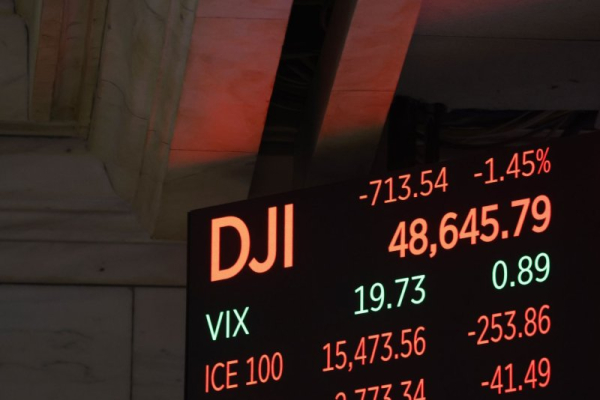
Much of the dissatisfaction with capitalism comes from a growing perception that economic life has drifted away from ethical restraint. File Photo by John Angelillo/UPI | License Photo
Across much of the world, capitalism is on trial. Public trust in markets has weakened. Younger generations question whether the system delivers opportunity and a sense of fairness. Yet much of this dissatisfaction does not stem from markets themselves, but from a growing perception that economic life has drifted away from ethical restraint.
When people criticize “capitalism,” they often describe a system distorted by corruption, political favoritism and waves of speculative excess. Those failures are real. However, they are not the result of excessive market freedom. They reflect something else: economic activity detached from the moral norms that once guided it.
Nearly a century ago, Anglican cleric Frederick Lewis Donaldson warned against what he called “the seven social sins,” including wealth without work and commerce without morals. His concern was not profit itself. It was the danger of economic life unmoored from conscience. That warning sounds less like a sermon from another era and more like a description of today’s anxieties.
Capitalism, properly understood, has never been only about contracts and property rights. It rests on assumptions about human nature. People are not merely profit-maximizing actors. They are moral agents capable of responsibility and moral judgment. Markets function best when participants respect rules and honor commitments, while remaining mindful of how their actions affect others. When those habits weaken, economic freedom can degenerate into manipulation or short-term gain at the expense of long-term trust.
This is not a new insight. Sociologist Max Weber observed that early capitalist development was shaped by moral disciplines such as diligence, frugality and a strong sense of vocation and duty. Benjamin Franklin, a practical thinker rather than a theorist, tied prosperity to industriousness and moderation, not speculation or waste. Adam Smith, often reduced to a caricature of self-interest, grounded his economics in moral psychology, arguing that human sympathy and social norms moderate behavior.
The point is not that faith or virtue automatically produces wealth. Economic systems depend on cultural foundations. Families that transmit values and schools that cultivate character, along with communities that reward integrity, are not separate from the economy. They sustain the trust and expectations that allow markets to function.
When those foundations erode, the distortions become visible. Wealth flows not to productive activity but to political connections. Monopolies grow comfortable under regulatory protection. Financial practices detach from real value creation. Public resentment rises, and calls for heavy-handed state intervention follow. In this way, the loss of moral restraint can lead not to freer markets, but to more politicized and less dynamic ones.
This helps explain why debates about capitalism often feel confused. Critics see inequality or corruption, along with growing instability, and conclude that markets have failed. Defenders respond with abstract models of efficiency. Both sides miss a central reality: capitalism weakens not when it allows freedom, but when it loses its ethical guardrails.
None of this means markets are self-correcting or immune to abuse. Oversight and enforcement matter. But lasting renewal rarely comes from regulation alone. It stems from restoring norms of responsibility and fair dealing, with a renewed sense of moderation — the informal disciplines that law cannot fully replace.
A capitalism without conscience is not a stronger system. It is a fragile one. Markets endure not because they ignore ethics, but because they presuppose them. If public trust is to be rebuilt, the task is not to abandon economic freedom, but to reconnect it to the moral and cultural foundations that made it viable in the first place.
Martin Biurrun is the Uruguayan representative for Legacy of the Americas, an independent movement promoting civic and ethical renewal across the Western Hemisphere. He holds a degree in corporate communications and leads national youth leadership initiatives. The views and opinions expressed in this commentary are solely those of the author.
