
Part of a series on capital flows and political risk in Latin America

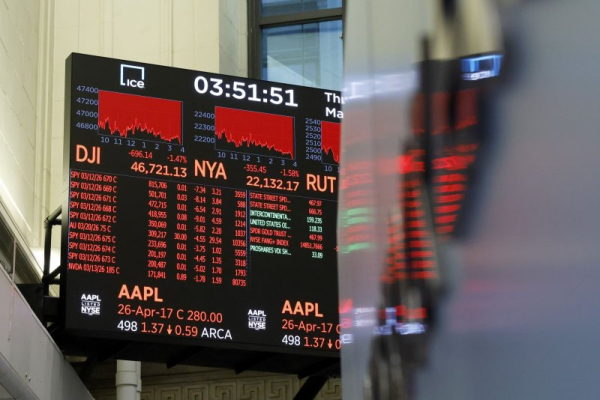
Latin America’s future growth will depend not only on politics or commodity prices, but on something less visible and just as decisive: the cost of capital. File Photo by John Angelillo/UPI | License Photo
Latin America’s future growth will depend not only on politics or commodity prices, but on something less visible and just as decisive: the cost of capital.
That cost helps determine whether roads get built, factories expand, renewable energy projects move forward and new technologies attract investment. When financing is expensive, even good ideas struggle to get off the ground. When it falls, growth becomes easier to finance and more likely to last.
That is why one of the region’s most important economic questions over the next several years is whether Latin America can lower the price it pays for investment.
The answer is yes, but not automatically.
Why capital costs may fall
Several forces are moving in the right direction. Stronger environmental, social and governance standards, wider use of digital tools and more credible public institutions could all help reduce financing costs across the region. But those gains could be offset by one major threat: climate risk. And unless Latin America also moves toward deeper regional integration, many of the benefits will remain limited.
One reason for optimism is that global investors increasingly reward credibility. Companies and countries that demonstrate stronger governance and clearer disclosure are often seen as less risky, especially when they also show steady ESG performance. Investors demand lower returns when they have greater confidence in how an institution is run and in the predictability of its future cash flows.
What was once treated as a branding exercise is becoming a financial reality. According to a 2024 World Bank analysis, cumulative issuance of green and sustainability-related bonds worldwide has surpassed $5.7 trillion. In Latin America, Chile offers one of the clearest examples. After issuing the first sovereign green bond in the Americas in 2019, Chile quickly expanded that market. By 2022, about 31 percent of its government debt was in ESG instruments, while Chilean corporations also moved into labeled issuance.
The lesson is simple: when credibility improves, financing costs can fall.
In a region where perceived risk has long been a barrier to investment, that shift matters enormously.
The digital advantage
Digitalization is also becoming a financial advantage, not just an operational one. Companies that adopt better management systems, automate reporting and improve traceability tend to reduce errors and increase transparency. That makes revenue streams easier to assess. The more clearly a company can show how it performs, the easier it becomes to finance.
This matters especially in Latin America, where information gaps have long raised financing costs for smaller firms.
According to the Bank for International Settlements, nearly 30 percent of small and medium enterprises in the region report being partially or fully credit-constrained, about three times the rate seen in advanced economies. Many are penalized not because they lack viable projects, but because they lack the records lenders need to properly price risk.
Digital tools can help narrow that gap. Fintech lenders and data-driven platforms are already showing that transaction data and newer credit-scoring tools can partly substitute for the paper trails that once kept firms out of conventional financing. These tools will not solve every structural weakness, but they can make companies more transparent and easier to finance.
The country-risk problem
Yet the biggest structural difference between Latin America and developed markets remains country risk. Even well-run firms often pay more for capital simply because they operate in economies viewed as more volatile or less institutionally stable than those in advanced markets.
That premium is real. As of late 2024, Brazil’s sovereign EMBI spread was around 200 basis points above U.S. Treasuries, while countries such as Bolivia and Ecuador were far higher. Uruguay and Chile, by contrast, remained much closer to levels associated with more predictable financing conditions.
This gap affects far more than sovereign borrowing. It shows up in infrastructure lending and corporate borrowing across the economy. If countries can strengthen fiscal governance and institutional credibility while preserving macroeconomic stability, that premium could fall, benefiting not just governments but every private borrower in the economy.
Climate risk could offset progress
Still, the outlook is not purely encouraging. Climate risk is becoming a more direct financial factor. Droughts, floods, hurricanes and other extreme events are no longer occasional disruptions. They are increasingly part of how investors assess long-term exposure.
Countries and sectors that are more vulnerable to physical climate impacts may face higher financing costs even as they improve sustainability reporting or pursue energy transition goals.
That creates a real tension for Latin America. The region has a major opportunity to attract investment in clean energy and other sustainable sectors. At the same time, it remains highly exposed to the physical and fiscal consequences of climate shocks. If adaptation does not keep pace, some of the gains from ESG progress could be erased.
Why integration matters
Regional integration deserves much more attention than it usually gets in discussions about finance.
A more coordinated Latin America, especially a more effective Mercosur, could reduce some of the fragmentation that markets still price into the region. The OECD’s Latin American Economic Outlook 2024 identifies deeper regional capital markets and stronger integration as important tools for lowering financing costs. Fragmented national markets keep the investor base smaller and risk premiums higher than they need to be.
A larger and more integrated regional market would improve resilience and make growth less dependent on the political cycle of any single country. Better trade coordination, along with more credible fiscal and investment frameworks, could help investors see the region as less volatile overall.
A narrower window for action
In the most realistic positive scenario, Latin America combines four things over the rest of this decade: stronger governance standards, faster digital transformation, credible institutional reform and deeper regional integration. If that happens, the average cost of capital for firms in the region could fall meaningfully by 2030.
That would lower barriers to infrastructure, clean energy and long-term industrial investment across the region.
That would not solve all of Latin America’s development problems. But it would improve the odds of sustained growth.
The cost of capital in Latin America is not set in stone. It is shaped by policy, governance, technology and market confidence. The region still has room to lower it, but the window will not remain open indefinitely.
The countries and companies that act decisively by improving transparency, modernizing operations, strengthening institutions and embracing integration will arrive at 2030 with a real competitive advantage.
Those that do not will keep paying more for capital and more for delay
César Addario Soljancic is an economist specializing in public finance, with decades of experience advising governments and institutions across Latin America and the Caribbean. Over his career, he has led 69 capital-market issuances across 13 countries, totaling nearly $49 billion. The views expressed are solely those of the author.
